CIPP Drain Pipe Relining Northamptonshire
CCTV-led assessment of damaged pipework, with trenchless lining considered where the pipe can be prepared and accessed safely.
Signs you need this service
- A CCTV inspection has found cracks, open joints, displaced connections or root ingress.
- The same section keeps blocking after it has been cleared.
- You want to understand whether a repair can be made from inside the pipe before considering excavation.
- You have received a repair recommendation and want the evidence and options explained clearly.
What we do
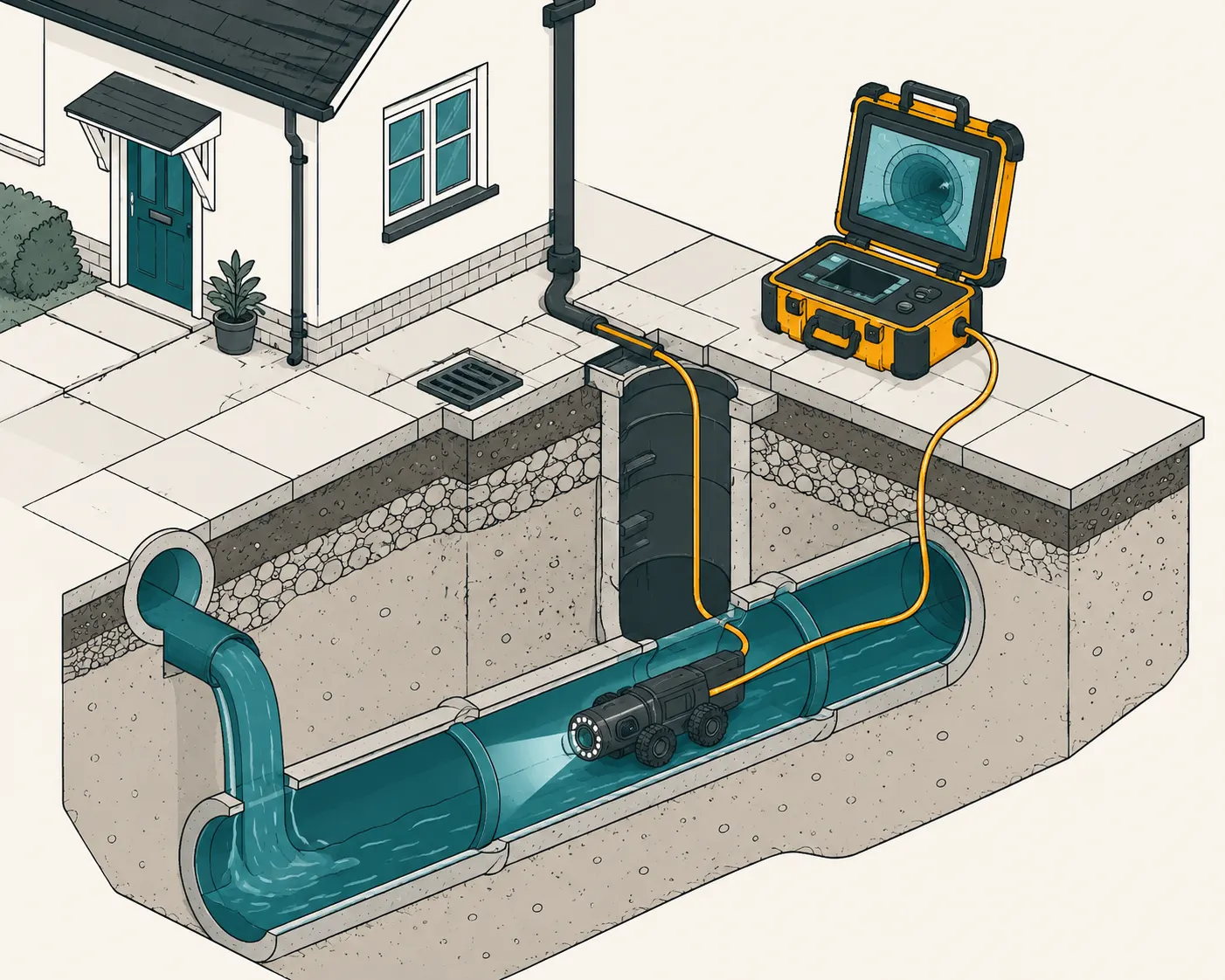
Drain relining is a way of repairing a suitable damaged pipe from the inside. A liner is positioned within the existing pipe and cured so it forms a new internal surface. A localised patch may be suitable for a short defect; a longer liner may be considered where damage extends along a greater length. The right method depends on the CCTV findings, pipe size and material, access, bends, connections and the condition of the host pipe.
We begin with inspection and a discussion of the evidence. The camera footage helps locate the defect and shows whether deposits, roots or other obstructions need to be removed before any repair is considered. We explain what the footage does and does not show, outline suitable approaches, and provide a separate quote before additional repair work proceeds. If relining is not appropriate, we will explain why and discuss other options, which may include excavation by a suitable contractor.
This page is about CIPP and trenchless repair options, not a promise that every drain can be repaired without digging. Severe deformation, collapse, inaccessible runs or unsuitable connections can rule out a liner. The purpose of a proper assessment is to match the remedy to the defect and avoid selling a method simply because it is described as no-dig.
No-Dig Pipe Relining & Patch Repairs in Northamptonshire
A patch repair is designed for a defined, local defect. After the relevant section has been inspected and prepared, a resin-impregnated repair sleeve can be positioned over the damaged area from an access point. Once cured, the patch reinforces that part of the pipe. It can be a practical alternative to opening a driveway, floor or garden when the defect is local, the pipe shape is suitable and there is enough access to carry out the work correctly. A camera check before and after helps confirm the location and the result.
A longer CIPP liner may be considered when a section of pipe has several defects or the pipe wall has deteriorated across a broader run. The liner is installed inside the host pipe and forms a continuous inner surface after curing. The existing drain remains in place around it. This can reduce disruption compared with replacing a whole run by excavation, but it does not make the internal diameter larger and it cannot correct every alignment or capacity problem. A camera survey is needed to assess the condition and identify connections that may need reinstating.
The phrase ‘no-dig’ describes how the repair is accessed; it should not be treated as a guarantee that digging will never be needed. Access may require lifting a cover or making a small opening, and some defects cannot be reached or repaired internally. We explain likely access requirements before work starts. If the inspection shows that a liner would conceal rather than solve the underlying problem, we will say so and explain why an alternative repair should be considered.
CIPP Relining vs. Traditional Excavation
CIPP lining and excavation solve different kinds of problems. A liner can be considered where the existing pipe has a suitable shape and the defect can be reached, cleaned and sealed from inside. Excavation may be more appropriate when a pipe has collapsed, lost its shape, moved substantially, or needs a new connection or a change in route. Comparing the options means looking at the footage, access, depth, surrounding surfaces, pipe material and the purpose of the drain, not choosing a repair based on a headline price alone.
An internal repair can reduce the area of paving, flooring or landscaping disturbed, which may help limit reinstatement work. It still requires preparation, equipment and appropriate curing time, and the cost depends on the length and complexity of the repair. Excavation involves exposing and replacing or repairing the affected section and then reinstating the surface. It may be necessary to achieve the right fall or replace a badly damaged run. We outline the work included in a quote so the comparison is between like-for-like scopes.
A fair recommendation should answer three questions: what defect is visible, what repair method is suitable for that defect, and what is excluded from the price. We can use CCTV footage and photographs to explain the condition and the proposed repair in plain language. If ownership of the affected section is unclear, it is sensible to check the relevant water company’s responsibility information before authorising private repair work. A survey is evidence about condition; it is not, by itself, a legal ruling on ownership.
How Trenchless Drain Lining Works
A typical relining job has several stages. First, the drain is accessed and inspected so the defect can be located and its extent understood. The pipe is then cleaned as required to remove silt, grease, roots or loose material that could interfere with the repair. A second camera inspection checks that the surface is suitable and that the relevant route is clear. The preparation stage matters: a liner should not be placed over an obstruction that prevents it from sitting correctly against the pipe wall.
Next, the repair material is prepared to the selected method and pipe dimensions. For a patch, the repair sleeve is positioned over the identified defect using the access route. For a longer liner, the prepared liner is introduced and installed along the agreed length. The material is then cured according to the system and site conditions. The exact process varies by equipment and repair type, so the scope should identify what is being lined, where the liner begins and ends, and whether any side connections need attention.
After curing, the camera is used again to inspect the repair and confirm that the route is open. A clear record should identify the repaired section and any limitations seen during inspection. A liner can improve the pipe wall at the repaired location, but the rest of the drainage network may still have separate defects. Where the camera finds additional issues, these should be recorded and discussed separately rather than assumed to be covered by a repair to one section.
Planning a Drain Relining Visit
We discuss drain relining enquiries across Northamptonshire and nearby towns including Northampton, Kettering, Corby, Wellingborough, Daventry, Rushden, Brackley and Towcester. Work outside the county can also be considered depending on the job, access and diary. Tell us the property location, the type of pipe if known, and whether you already have CCTV footage or a written report. That helps us establish whether an inspection is the right next step and what information would be useful before a visit.
Before booking, it helps to have the latest survey, photographs of any access chambers and a note of recurring symptoms. If the drain has already been cleared, mention when the problem returned. We can then explain whether we need to inspect the line ourselves or whether the existing evidence may be enough to discuss next steps. Call 01604 389 247 to describe the issue; the engineer can explain the assessment and quote process before you decide whether to proceed.
For a more useful first conversation, note whether the drain serves a house, a block of flats or a commercial site, and whether the affected run is foul water or surface water if you know. Share any previous repair paperwork, but do not assume that an old recommendation still applies: ground movement, further blockages or later work may have changed the condition. We can review available footage and explain what it establishes, what remains uncertain and whether a new inspection is worthwhile.
If a relining quote is accepted, confirm the repair length, access points, preparation, curing method, reinstatement exclusions and post-repair inspection in writing. Ask how the engineer will deal with any side connections and what records will be supplied. These details make it easier to compare proposals and understand what happens on site. After completion, keep the report with the property’s maintenance records so a future owner or contractor can see which section was repaired and when.
Every visit has a fixed first-hour call-out fee with no hidden costs. Ask about a free initial check of whether the water company may be responsible. Depending on your postcode, that may involve Anglian Water, Severn Trent Water or Thames Water; the relevant company confirms formal ownership. For 24/7 drainage assistance, call 01604 389 247. Compare related work on our services page, or contact RCH Drainage with your postcode and any survey details. For local drainage information, see our pages for Northampton, Kettering, and Wellingborough. For more background, read Signs of a collapsed drain (and what to do next).
Drainage work in Northamptonshire
Is it actually your problem? We check before you pay.
Ask us for a free initial check of whether the water company may be responsible. Depending on your postcode, that may involve Anglian Water, Severn Trent Water or Thames Water. The relevant company confirms formal ownership. If the issue appears to be its responsibility, we explain what we found before you authorise private repair work.
How the water authority check worksWhy RCH Drainage
24/7 response
Engineers on standby every day of the year.
Local engineers
Northamptonshire-based teams, not a national call centre.
Transparent pricing
Fixed call-out fee covering the first hour on site - no hidden costs, further work always quoted first.
Northamptonshire Towns Covered & FAQs
- Can every damaged drain be relined without digging?
- No. Relining depends on the pipe shape, defect, access and condition. A collapsed, badly deformed or inaccessible pipe may need a different repair. We use inspection findings to explain whether a liner is suitable.
- What is the difference between a patch and a full liner?
- A patch targets a short, local defect. A longer liner covers a greater length of pipe where the condition and access make that appropriate. The CCTV survey helps establish the area that needs attention.
- Do I need a CCTV survey before getting a relining quote?
- The pipe should be inspected so the defect, dimensions and access can be assessed. If you already have recent footage and a report, share them first so we can advise whether another survey is needed.
- Will relining stop every future blockage?
- A repair addresses the condition and location agreed in its scope. Other parts of the drainage system can still have separate issues, so no repair can guarantee that all future blockages will be prevented.
Need cipp drain pipe relining now?
Speak to a local engineer or request a callback - we'll get back to you fast.